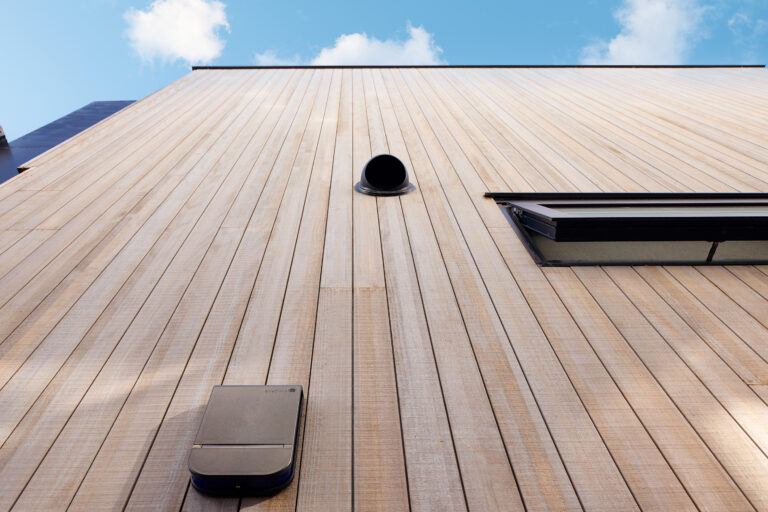
If you’re planning a wood ceiling and can’t decide between Maximo Thermo and Cedar, you’re not alone. Both are premium options known for their beauty and durability — but they behave quite differently.
Let’s break down what really matters, from moisture control to color stability, and help you choose the right one for your project.
The quick answer
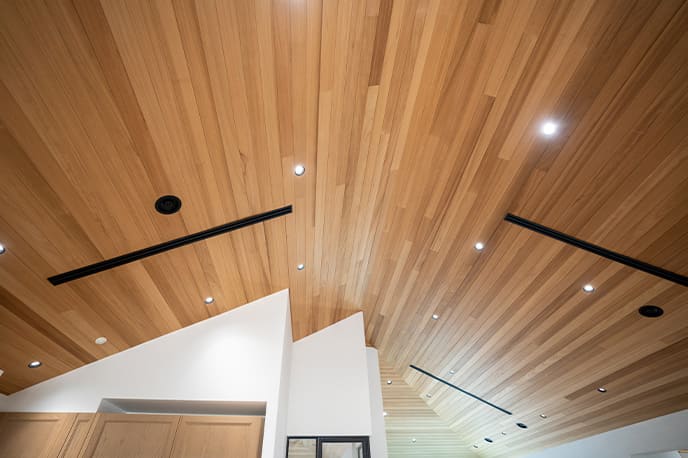
If you want a stable, uniform, low-maintenance ceiling, MaximoThermo wins.
If you prefer a classic wood with characteristic aroma, Cedar is your pick.
But the real story gets more interesting when we look at the technical side.
What they really are
MaximoThermo is a collection of thermally modified woods that’s heat-treated in a low-oxygen environment. This process changes the wood’s structure, making it more stable and resistant to decay. Think of it as wood that’s been upgraded by science.
Cedar, on the other hand, is basically a raw, forest-cut wood. Western Red Cedar is the most common type, known more for its distinct smell and naturally reddish color than for any exceptional performance. While it does resist moisture reasonably well, it’s still a soft wood.
Technical comparison
Feature
Maximo Thermo
Cedar
Type
Thermally modified wood
Natural softwood
Density
Very light and easy to handle
Moderate
Dimensional stability
Excellent – barely moves with humidity
Good, but can move a bit more
Decay resistance
High – improved by heat treatment
Moderate – naturally resistant
Appearance
Refined and uniform
Natural raw
Maintenance
Very low
Moderate
Cost
Mid-range
Mid-to-high (depends on grade and source)
Best for
Modern clean look
Classic wood ceilings
How they perform on ceilings
Stability and movement
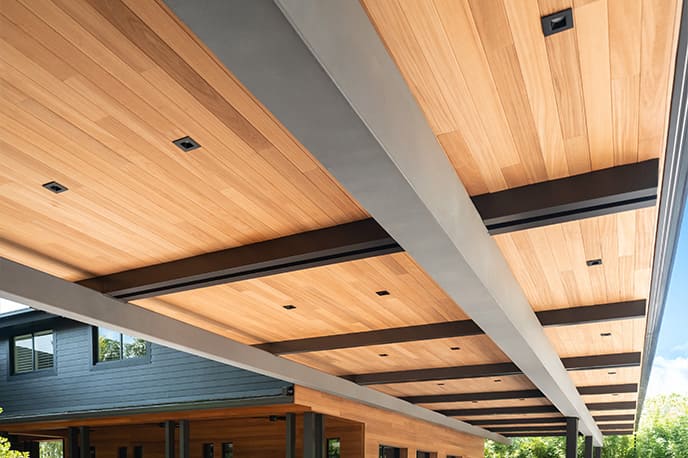
Because of the thermal modification, MaximoThermo barely moves when humidity changes. That’s a big plus for ceilings in bathrooms, kitchens, or coastal homes, where condensation and moisture can cause swelling and gaps in regular wood.
Cedar also performs well, but it’s a bit more responsive to humidity swings. You might notice minor seasonal changes, especially if your home isn’t climate-controlled year-round.
Strength and durability
Both are more than strong enough for ceilings since the boards are not structural. And in terms of longevity, both can easily last for decades indoors. Maximo Thermo’s modified cell structure gives it exceptionally high resistance to rot and fungi. Cedar, by comparison, relies on its natural oils and extractives, which do help but do not offer the same level of long-term stability or consistency as the engineered treatment behind Maximo Thermo.
Appearance and color
If you love even, modern tones, Maximo Thermo has you covered. It comes in four different species that range from a light brown to a deep dark brown, so there is an option for almost any color preference. Each one maintains a consistent and uniform appearance from board to board.
Cedar, on the other hand, is far less predictable. You will see a mix of grain patterns, colors, and knots, which can feel rustic rather than refined. It works if you want a very natural look
Installation notes
- It’s recommended to let the boards acclimate indoors for at least 2–3 days before installing.
- Use stainless-steel screws (especially in humid areas).
- Pre-drill near the edges to avoid splitting.
- Leave small expansion gaps (Maximo needs way less, but still leave a few millimeters).
- If you want to seal the color, apply a clear oil or finish before installation.
So which one should you choose?
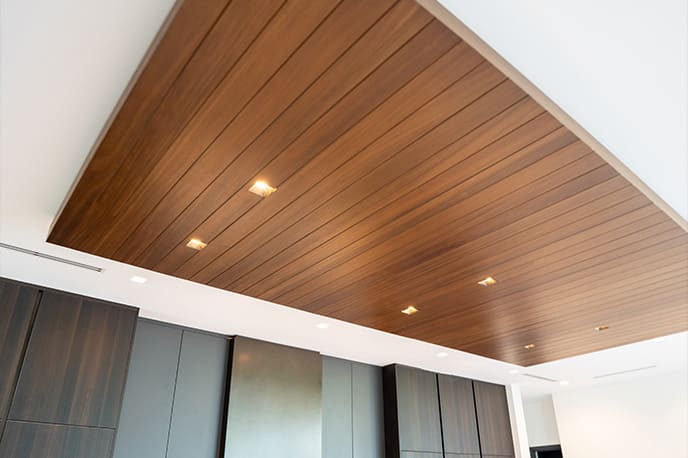
Here’s the easy way to decide:
If you want…
Go with…
Maximum stability and low maintenance
Maximo Thermo
A natural, aromatic ceiling with visible grain
Cedar
A sleek, uniform color for modern interiors
Maximo Thermo
A traditional wood look with character
Cedar
Best performance in humid rooms
Maximo Thermo
Final thoughts
Both MaximoThermo and Cedar bring warmth and character to any space — it really comes down to your design style and the environment.
For modern, high-humidity interiors, MaximoThermo gives you a clean, stable surface that stays beautiful for years.
For classic or rustic spaces, Cedar’s natural grain and aroma make it timeless.
Whichever you choose, make sure the wood is FSC-certified and properly acclimated before installation. A well-done wood ceiling can easily last a lifetime — and make your space feel warm, natural, and elevated.